When a business decides it's time to grow, ads are usually the first thing it reaches for. It makes sense. Ads are fast and measurable, and you can switch them on this afternoon. For a lot of business owners, they're the closest thing marketing has to a growth button.
And ads do what they're designed to do. They put a business in front of people who might never have found it otherwise, and the numbers start showing up within days.
What an ad doesn't do is make the sale. It makes an introduction. What happens after that introduction depends on everything else the business has already put into the world.
What Happens After the Click
Think about the last time you bought from a business you'd never heard of. Chances are you didn't see an ad and buy on the spot. You clicked through, had a look around the website, and maybe checked their Instagram or searched the business name to see what came up.
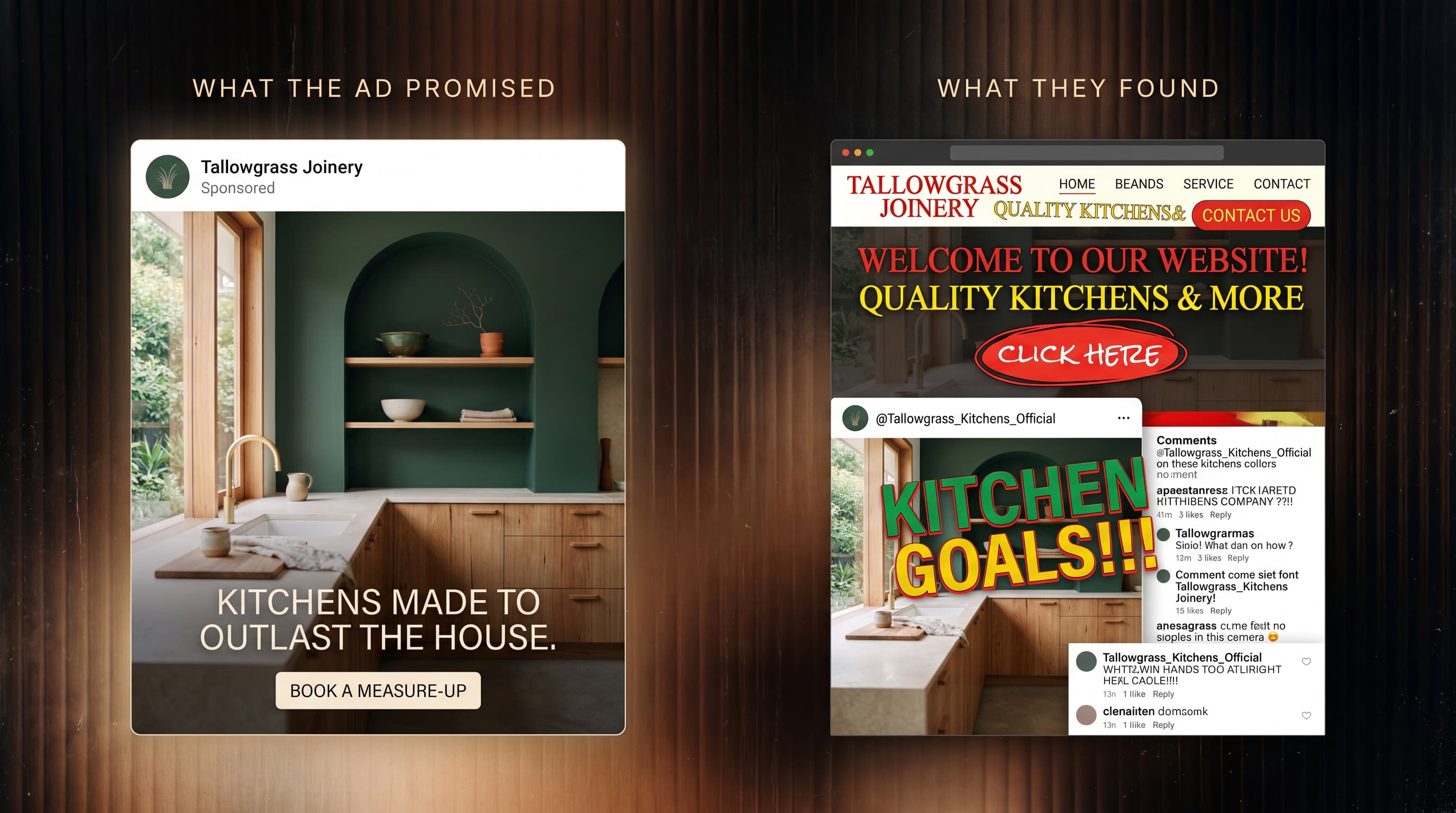
Your customers do the same. An ad makes a promise, and everything they find next either backs it up or quietly works against it. The ad talks about premium quality, and the website leads with price. The ad looks polished and considered, and the social feed is a mix of stock images and a post from two years ago. Nobody consciously decides the business can't be trusted. They hesitate, close the tab and move on.
That hesitation is expensive. The click has been paid for either way. The difference is whether it led somewhere that made the decision easier, or somewhere that gave them a reason to wait.
Ads Amplify What's Already There
There's a common belief that ads can carry a business that hasn't quite settled on what it's saying yet. That if the targeting is right and the budget is big enough, the results will follow.
Ads don't work like that. They take whatever is already there and put more people in front of it. If the brand is clear and consistent, ads spread that clarity further. If the message changes depending on where you find it, ads spread the confusion instead, and you pay for every impression of it.
This is usually the point where a business decides ads don't work for them. The creative gets refreshed and the targeting gets adjusted, and sometimes that helps. Often, though, the problem was never in the ads. It was in what people found when they went looking.
What the Foundation Actually Looks Like
A solid foundation isn't a full rebrand or a year of preparation. It's making sure the places people check after seeing an ad are ready for them.
The website comes first. It should say the same thing the ads say, in the same voice, with the offer easy to find. If an ad promises something specific, the page it links to should deliver on that promise straight away, not leave people hunting for it.
Social media matters too, though not for the reason most people assume. A few weeks of consistent, on-brand posting before ads go live won't build a large following, and it isn't meant to. Its job is reassurance. When someone checks the feed after clicking an ad, they should find a business that's active, considered and clearly the same one they just saw.
Then there's what happens to the people who aren't ready to buy. On a first visit, that's most of them. Without a way to capture their interest, every ad dollar gets one shot. With a simple way to join an email list, and automations that follow up with something useful, the same spend keeps working long after the click.
There are exceptions. Someone searching for an emergency plumber at 10pm isn't scrolling through Instagram first. For high-intent searches like that, ads can do their job with less behind them. For most businesses and most purchases, though, people take a look before they commit.
The Foundation Is the Strategy
In our work, ads don't get switched on until the rest of the marketing is ready to support them. That isn't about delaying results. It's about making sure the people the ads bring in arrive somewhere that makes sense.
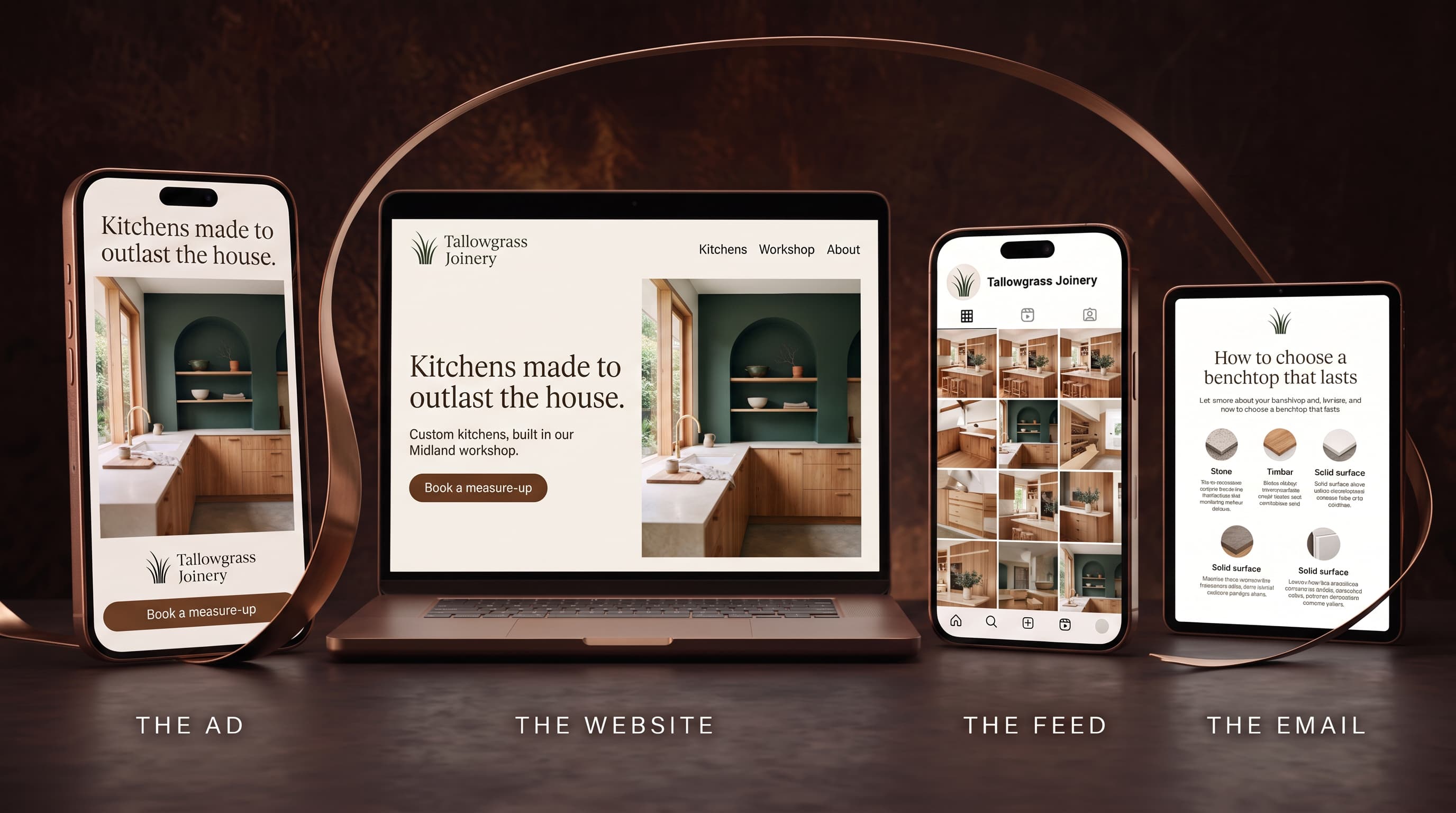
When the website, the social feed, the email automations and the ads all say the same thing, each one makes the others more effective. The ad introduces the business. The website confirms what the ad said. The feed shows the business is real and active, and the follow-up emails keep the conversation going until the customer is ready.
Paid traffic will always be one of the fastest ways to put a business in front of new people. What those people find when they arrive decides whether that speed turns into growth.
Written by
Taylor Watson
Co-founder